

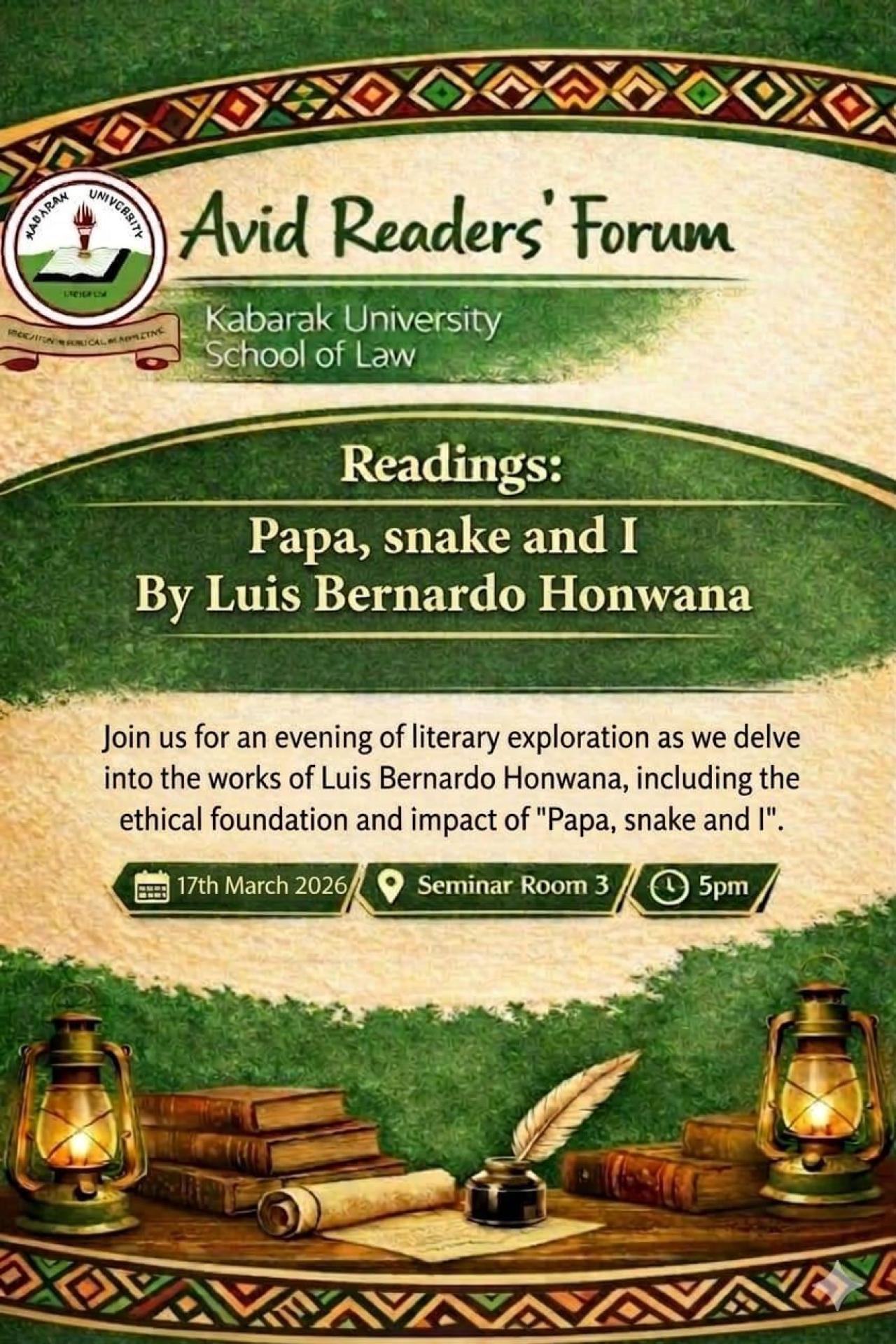
This report presents a structured account of the Avid Readers’ session on the short story ‘Papa, Snake and I’, moderated by Billheart Braxtone on 17 March 2026. The session focused on analysing the major events, themes, and lessons derived from the narrator’s encounters with the snake referred to as “Snake.” The discussion examined how the narrator’s perception evolves from fear to understanding through repeated observation of the snake’s behaviour.
Summary of the Story
The story recounts the narrator’s encounters with a snake that lives within the same environment as his family. At first, the narrator reacts with intense fear upon seeing the snake. The cultural perception of snakes as dangerous creatures strongly influences this reaction. However, as the narrator continues to observe the snake, he notices that it does not attack without reason. Instead, it behaves calmly and moves according to its natural instincts. This repeated observation changes the narrator’s perception. He begins to understand that the snake is not intentionally harmful but is simply part of the surrounding ecosystem.
The narrator eventually develops respect for the snake and recognises the importance of allowing nature to function without unnecessary interference. The experiences lead to personal growth and a deeper understanding of fear and reality. The narrative emphasises that fear often results from misunderstanding rather than actual danger, and that nature operates according to its own order without deliberate hostility toward humans.
Key Themes Identified in the Session
Ignorance creates fear - One major theme discussed was how fear often arises from lack of knowledge. The narrator initially fears the snake because of what he has been told about snakes rather than what he has personally observed. The moderator pointed out that the story demonstrates how direct experience can correct false beliefs. This taught the lesson that understanding reduces fear as careful observation of situations may make one realise their fears were exaggerated.
Co-existence with nature - Another theme highlighted was peaceful co-existence between humans and wildlife. Snake lives in the same environment as the narrator without causing destruction. This theme suggests that humans should learn to respect natural habitats instead of reacting violently to unfamiliar creatures. This also applies even to human relationships, with participants discussing the importance of tolerance instead of impulsive reaction to situations and people.
Growth through experience - Participants identified the narrator’s transformation as evidence of personal development. His reactions shift from emotional fear to thoughtful observation. The moderator explained that this growth represents maturity and learning through lived experience.
Respect for natural order - The story also emphasises the importance of allowing nature to operate without unnecessary human interference. The snake survives by following natural instincts rather than engaging in conflict. This theme reinforces the idea that not all threats require action.
Reflective Questions Raised by the Moderator
During the closing segment of the session, Billheart encouraged participants to reflect on the story using guiding questions intended to connect the story’s message to real-life experiences. These included:
1. Do I fear things because of actual danger or because of what I have been told about them?
2. How do my reactions change when I take time to observe before acting?
3. Am I willing to respect things that are different from what I understand?
Conclusion
The session provided a comprehensive examination of “Papa, Snake and I.” Through structured discussion, participants explored the narrator’s encounters with Snake and identified major themes such as fear, coexistence, and personal growth. The story ultimately teaches that understanding arises from observation and patience, while fear often results from misunderstanding. The moderator emphasised that these lessons remain relevant in everyday life, especially when dealing with unfamiliar situations. The session concluded with the recognition that the narrator’s transformation reflects a universal human experience: learning to replace fear with knowledge and reaction with thoughtful reflection.