
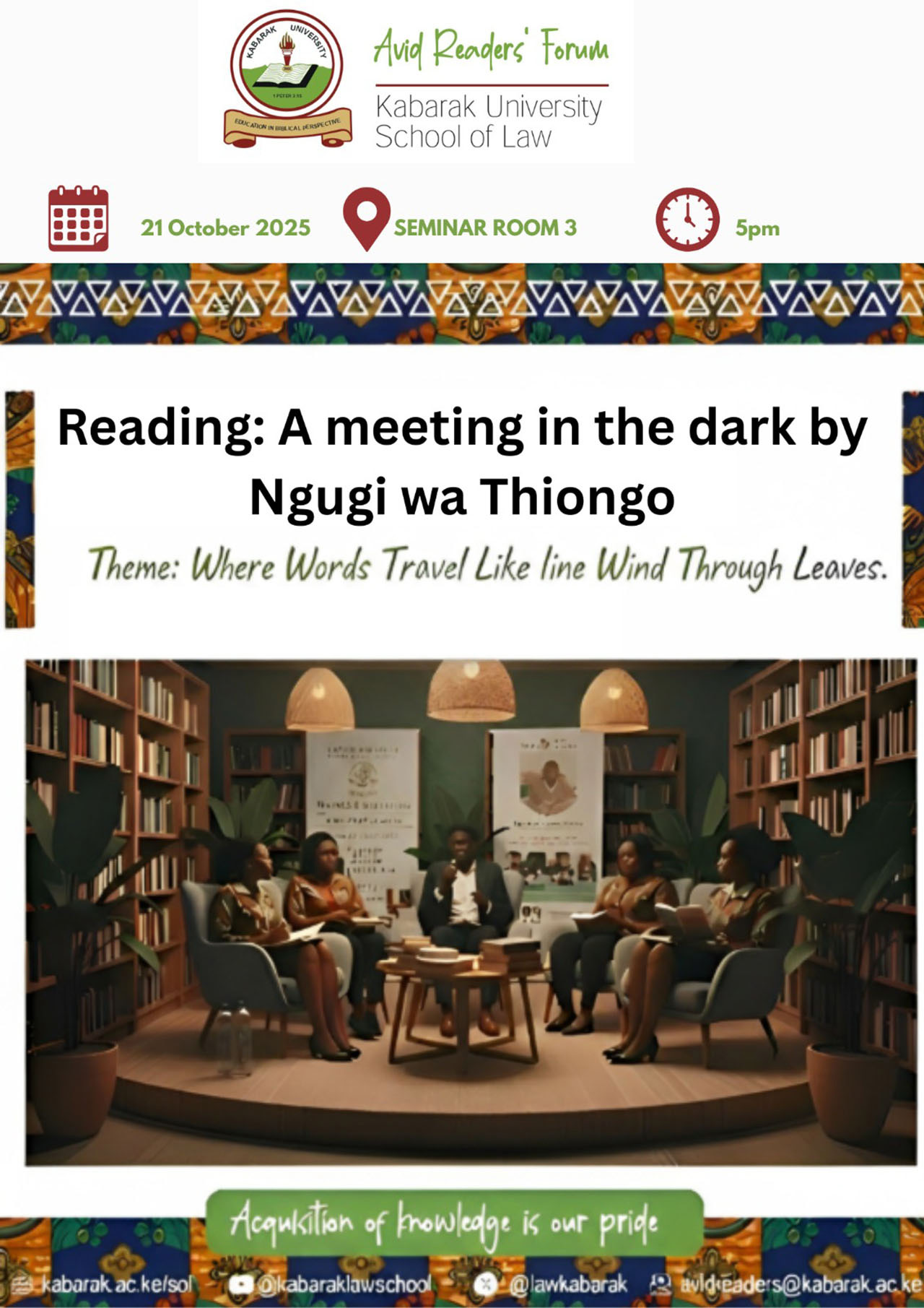
Ah! The title. “A Meeting in the Dark”, sounds like a setup for secret rendezvous, a lover’s whispers, or maybe a horror movie, though, it’s far more than some romantic cliché. The “darkness” is not just a missing bulb. It is moral, spiritual, and psychological. When John meets Wamuhu in the dark, the meeting is not only a secret but symbolic. A confrontation between tradition and colonial religion, between guilt and desire, and between two very different visions of heaven.
Key themes from the Session
Secrecy and Fear
John’s fear of his father is palpable. When the text tells us his father “always looked at him as though John was a sinner, one who had to be watched all the time,” we see a son defined by suspicion and fear.
John’s secret meeting with Wamuhu becomes an act of defiance, but also a trap of his own making.
The power of money
When I read that part, I felt the situation was deeply transactional, so I raised a question of transactional morality. John offers money to Wambui “I will give you two hundred shillings…three hundred shillings…four hundred shillings…”. This scene invited intense debate in our forum. Is John trying to buy his way out of responsibility or is he trapped by the logic of his world, where education, bursary and future stand as high stake?
A voice in the room during the discussion asked, “if this money is offered to erase pregnancy, is it escape or complicity?” This mirrors how the story criticizes a society where money becomes the substitute for responsibility.
Hypocrisy and Rigid Morality
Stanley, John’s father, is described as a convert whose zeal turned to control. His house becomes a “good example” of faith, yet his family suffers inside. When Susan says, “You make him fear you!”, we hear the irony. The clergy man breeds fear rather than peace.
Gender and Education
Wamuhu has “no learning, and she was not asked to go beyond standard four.” John who is educated, aware of bursary and future, judges her.
The highlight here is how gender and education shape power dynamics. She’s disadvantaged while John is advantaged but disempowered morally. Their tragedy speaks to how social structures crush both.
The Ending Tragedy
After Wamuhu’s death, the session paused. What happened to John? The story leaves us in the same darkness, unresolved. And I said: “He did not just kill her, he killed his chance at innocence.” That ambiguity lingers, the darkness does not simply lift.
Lessons and Reflections.
Responsibility cannot be bought, Money may silence a situation, it it does not cleanse conscience.
Moral courage is hard but necessary. John’s fear echoes many of our own. Fear of failure, of judgement, of losing opportunity. But moral courage demands more than fear. It demands facing the darkness, not running from it.
Cultural reconciliation is Essential. Morden education and traditional beliefs don’t have to be enemies. There has to be a bridge, a way to honor both without self-annihilation.
Women agency matters. Wamuhu’s plight reminded me of how crucial it is for women to be heard, supported, and respected, beyond being “part of someone’s problem.”
In a society where education is often tied to opportunity, I saw parallels with John’s dilemma. Many people today still feel pressured to conform to social or institutional expectations, even at personal cost. The gendered dynamics in the story resonate. The disadvantage Wamuhu faces today is not just historical but still lingers to present day.
The question of moral hypocrisy is very relevant in modern discourse. How often do people or institutions preach virtue while hiding their own contradictions?
Conclusion
In the darkness, John thought he could hide. But the dark is not simply a place of concealment, it is the crucible of truth. In that “meeting” everything breaks open: faith, shame, desire, and regret.
Ngugi does not give us a neat moral wrap-up. Instead, he leaves us with questions: What would you do if your secrets were laid bare? How much will you pat for peace, in money or in silence? And most chillingly, are some convictions worth the cost of your own soul?
As we switched off our metaphorical lights in the forum, we realised: the real light might just come from our own courage to reckon, not only with Ngugi’s characters, but with ourselves.
A closing poetic reflection
In the dark, we meet our fears.
In the dark, we face our choices.
John meets Wamuhu,
But also his own shadow,
The shadow of expectation, of history,
Of moral chain.
Ngugi whispers:
The light may guide you,
But the darkness reveals the truth.