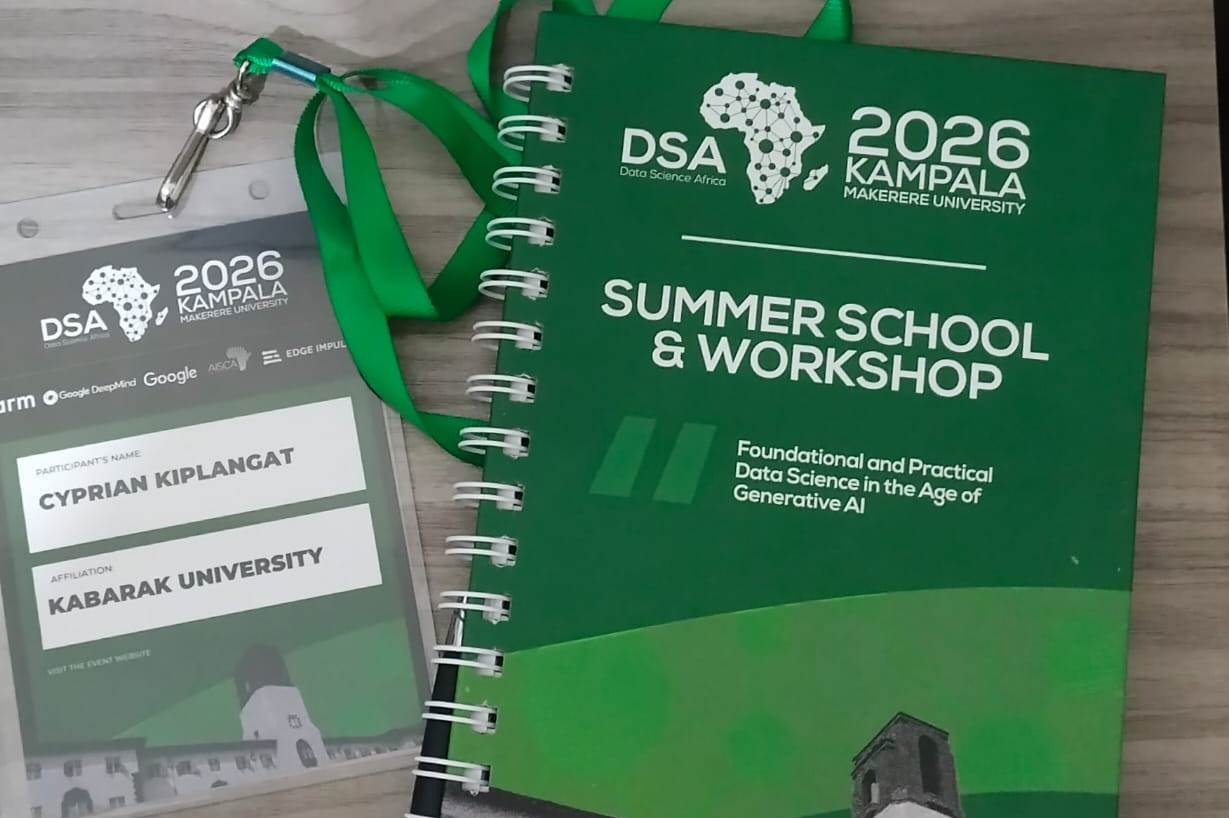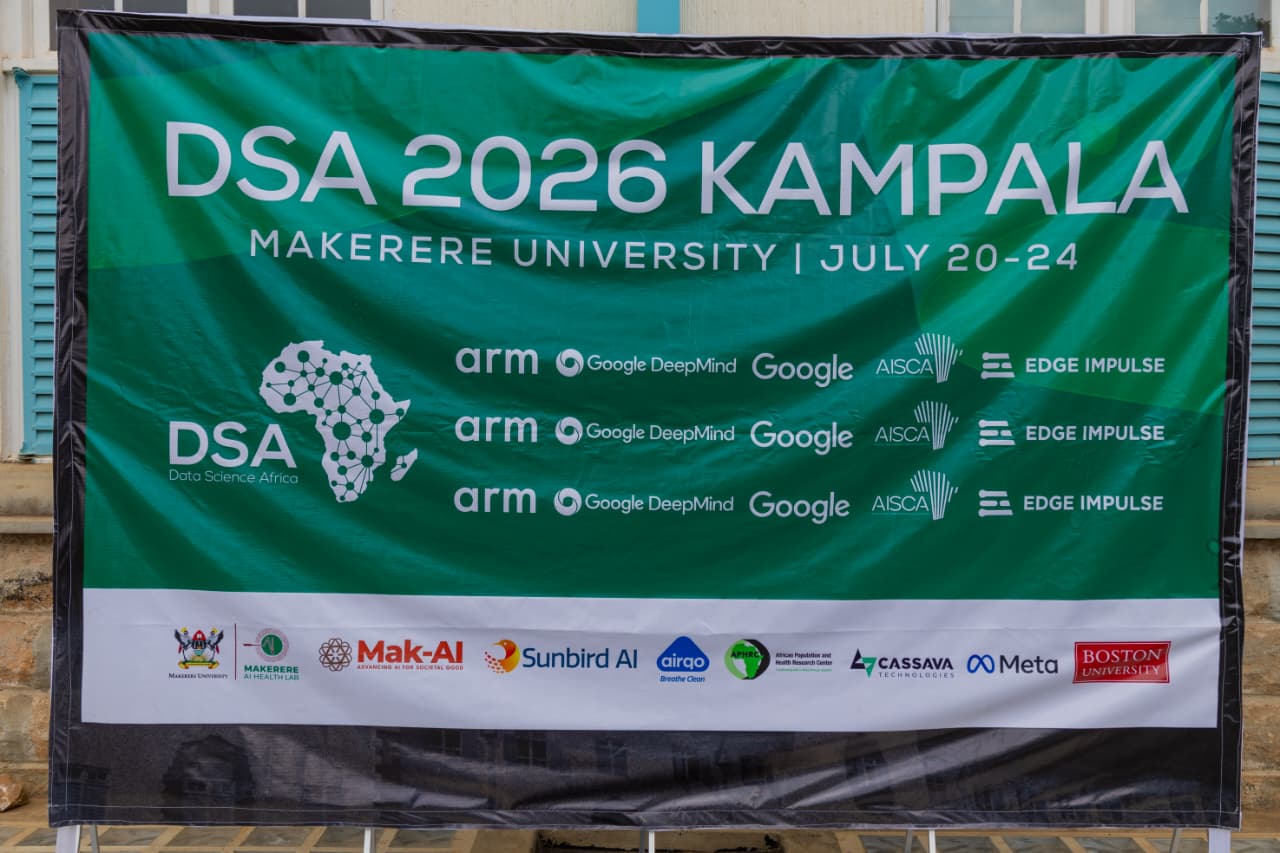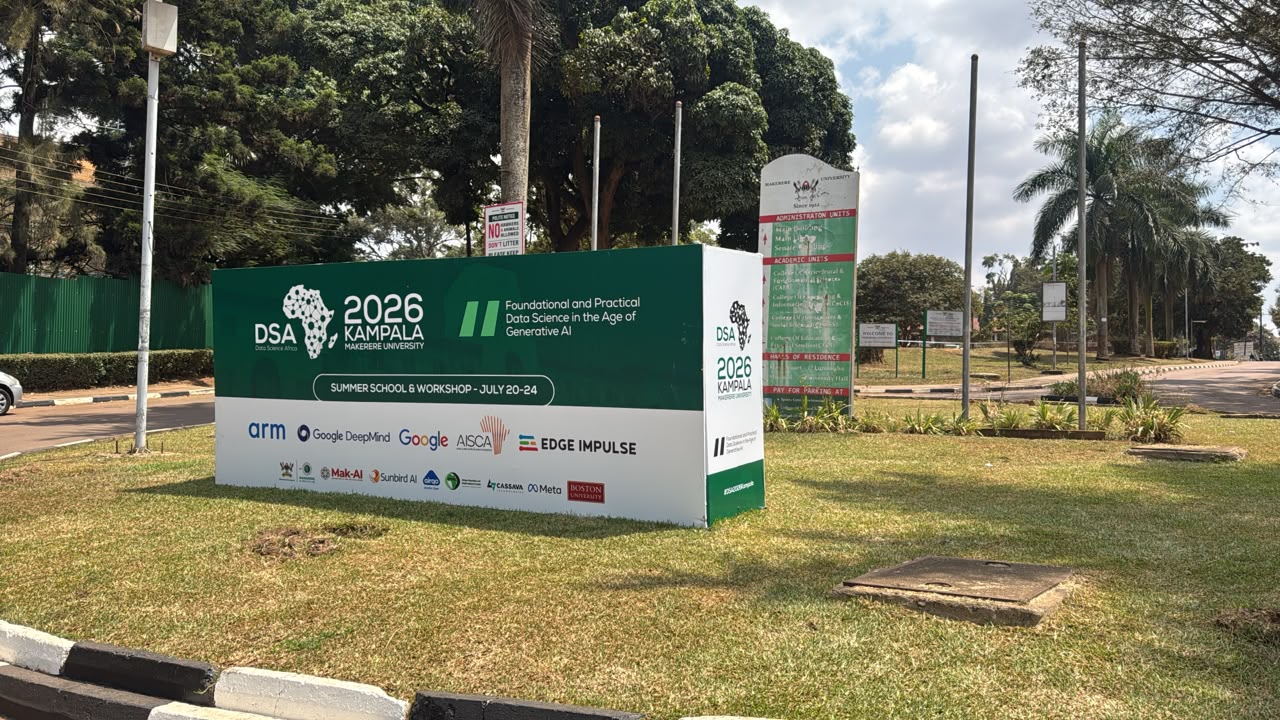
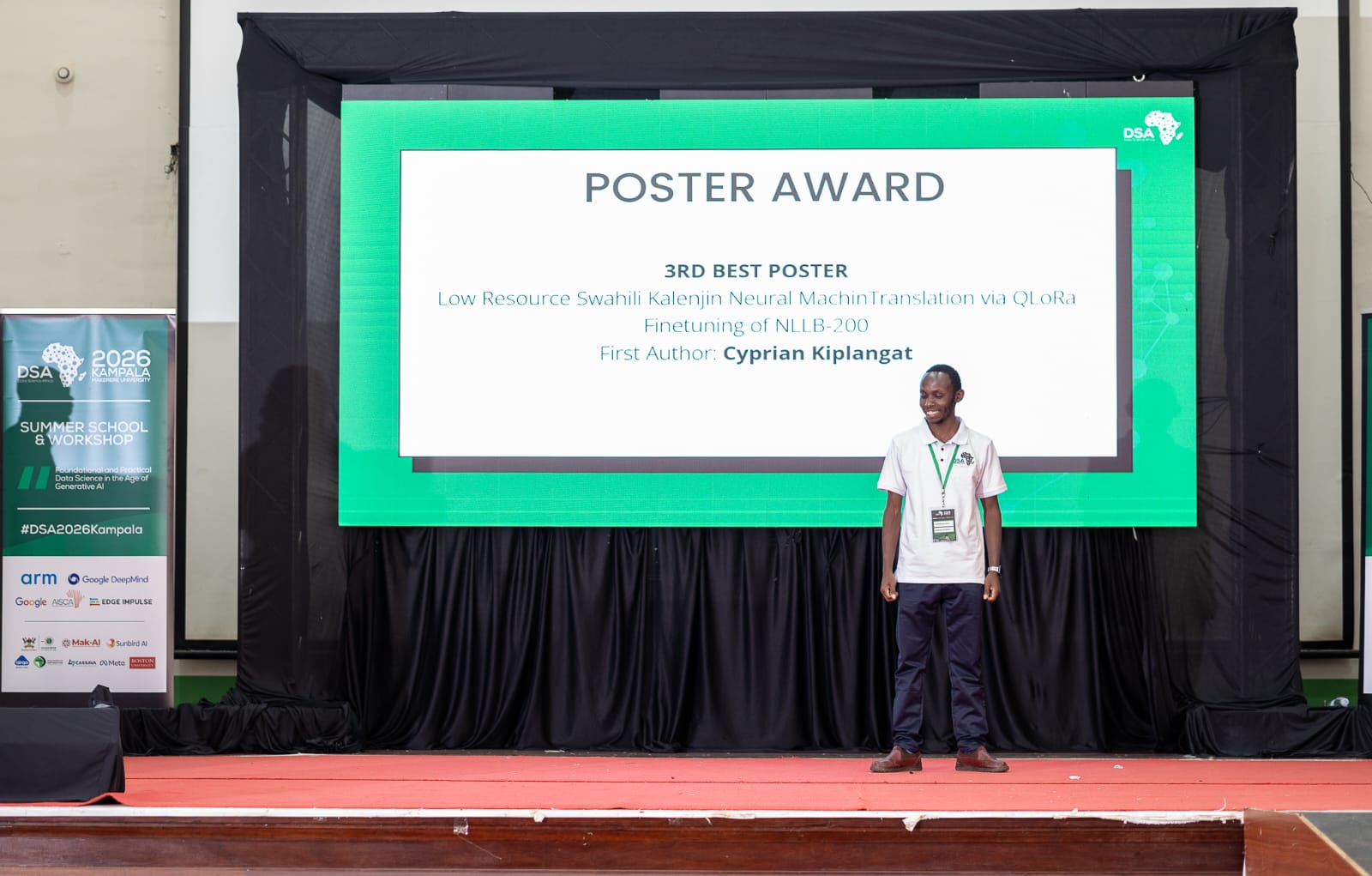
Africa's leading minds in Artificial Intelligence, Machine Learning, and Data Science converged in Kampala to explore technologies shaping the future, and among the institutions making a strong impression was Kabarak University. The University's researchers not only engaged with experts from across the continent but also returned home with international recognition after one of their research posters earned the Third Best Poster Award.
The event provided an important platform for learning, collaboration, and knowledge exchange. Kabarak University delegates participated in keynote addresses, technical workshops, tutorials, poster presentations, and panel discussions covering a wide range of emerging technologies. Sessions explored Generative AI, Large Language Models (LLMs), Natural Language Processing (NLP), Responsible AI, Deep Learning, Data Governance, AI for Social Good, and practical AI applications in healthcare, agriculture, education, finance, and climate resilience.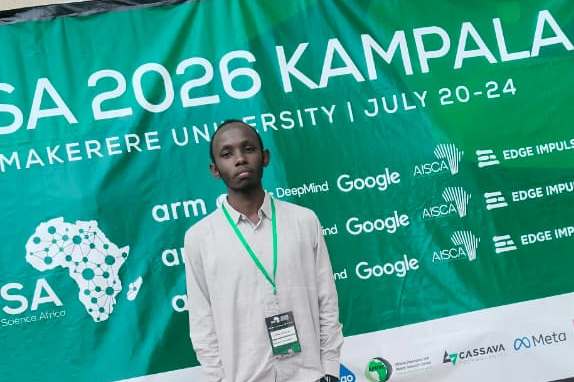
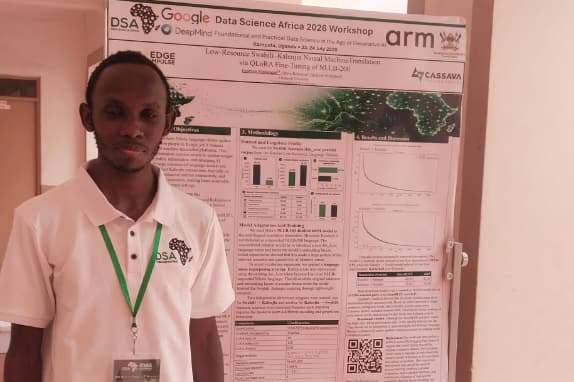
A standout achievement during the conference was the recognition of Kabarak University's research on African language technologies. The research poster, "Low Resource Swahili–Kalenjin Neural Machine Translation via QLoRA Fine-tuning of NLLB-200," presented by Cyprian Kiplangat, received the Third Best Poster Award. The study demonstrates how QLoRA fine-tuning of the NLLB-200 multilingual model can improve neural machine translation for low-resource African languages, contributing to indigenous language preservation, digital inclusion, and the advancement of Natural Language Processing for underrepresented languages.
Receiving this award reflects the growing quality and impact of research being undertaken at Kabarak University. It highlights the University's contribution to Artificial Intelligence, Data Science, and language technologies while demonstrating how locally driven research can provide innovative solutions to real-world challenges across Africa.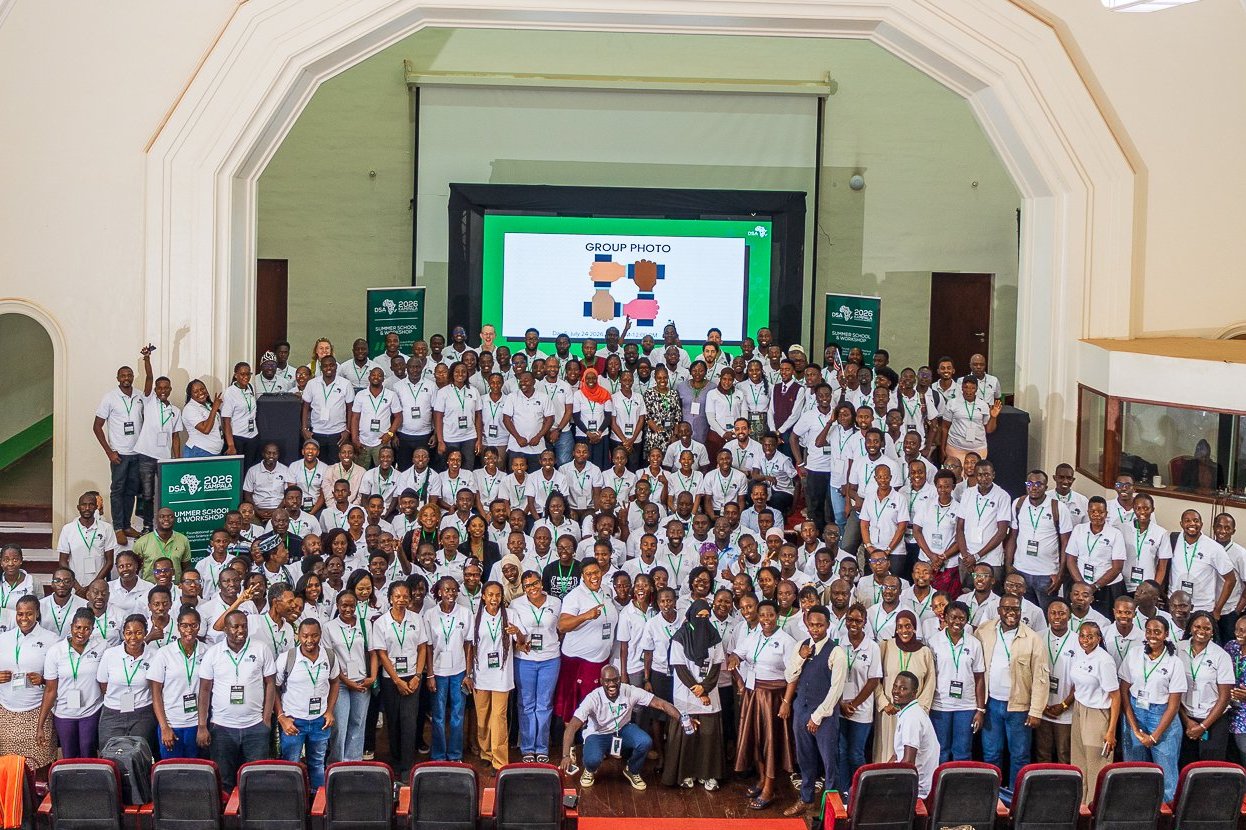
Beyond the research presentations, the Summer School created valuable opportunities to engage with universities, research institutions, technology companies, and development partners from across the continent. These interactions opened doors for future collaborations in research, innovation, staff and student exchange programmes, grant opportunities, and joint Artificial Intelligence and Data Science projects.
The experience gained during the programme will strengthen teaching, curriculum development, postgraduate supervision, and research activities at Kabarak University. Exposure to emerging AI technologies, international expertise, and collaborative research initiatives will continue to enrich the University's academic programmes while preparing graduates with the knowledge and practical skills needed in an increasingly data-driven world.