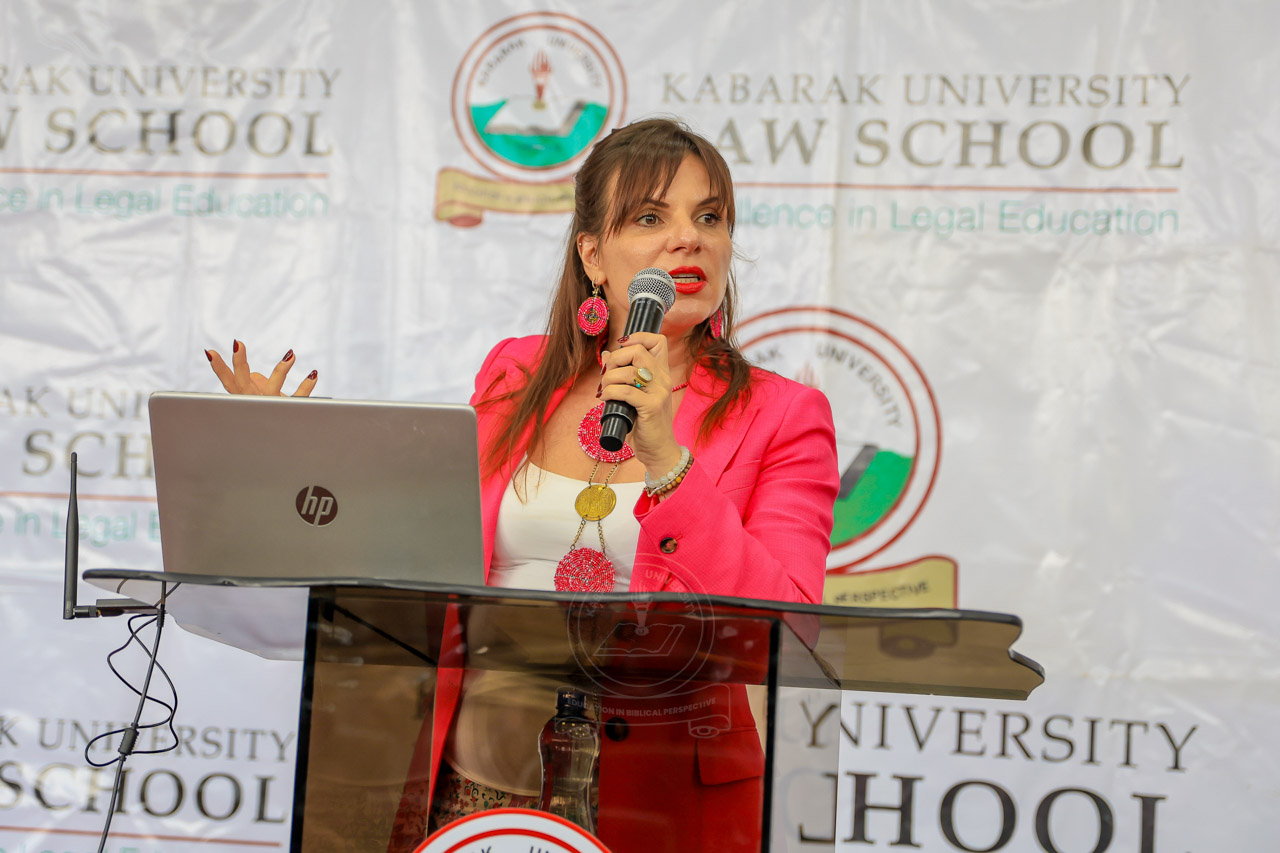
In a significant move to enhance its international scholarly profile and legal research capacity, Kabarak University has formally announced the appointment of Professor Oluyemisi Adefunke Bamgbose, SAN, as a Visiting Professor for the 2026/2027 academic year.
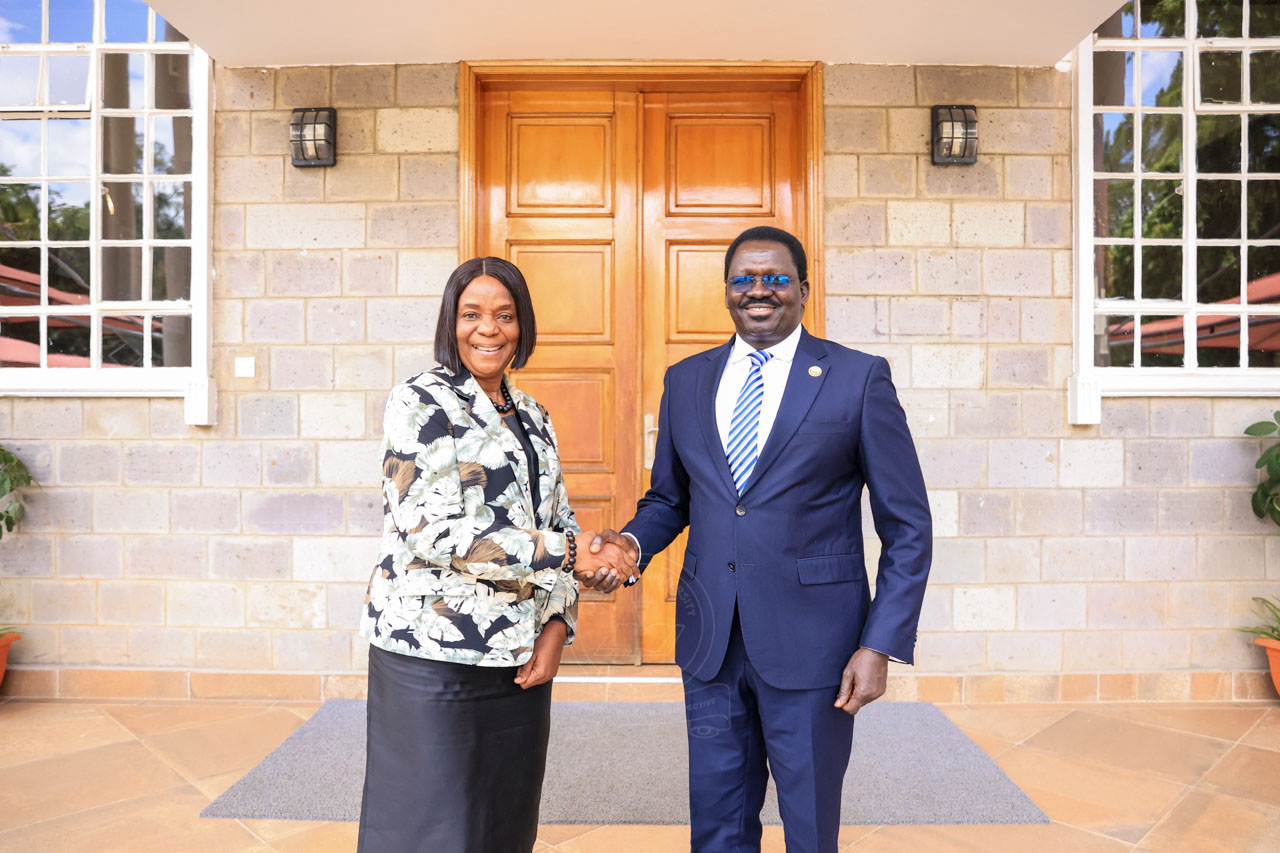
The Vice-Chancellor, Prof. Henry Kiplangat, PhD, MBS, OGW, officially introduced Professor Bamgbose during the University’s Wednesday Chapel service, characterizing the appointment as a cornerstone of the institution’s strategic internationalization agenda and its robust partnership with the University of Ibadan, Nigeria.
The arrival of Professor Bamgbose marks a historic milestone for Kenyan higher education. With her joining the faculty, Kabarak University becomes the only university in the country to host two Senior Counsel/Senior Advocates within its active teaching staff.
"The appointment of Professor Bamgbose is a testament to Kabarak University’s pursuit of excellence. As a scholar of international repute and a seasoned administrator, her presence reinforces our commitment to meeting the expectations of students and stakeholders, firmly rooted in our tradition of excellence." — Prof. Henry Kiptiony Kiplangat, Vice-Chancellor.
Professor Bamgbose arrives at Kabarak with a career defined by trailblazing achievements. In 2018, she became the first female Professor of Law in Nigeria to be conferred with the rank of Senior Advocate of Nigeria (SAN)—the highest professional distinction in the Nigerian Bar, equivalent to the King’s Counsel (KC) in the United Kingdom.
A specialist in Criminal Law, Criminology, and Human Rights, Professor Bamgbose previously served as the Deputy Vice-Chancellor (Research, Innovation, and Strategic Partnerships) at the University of Ibadan from 2021 to 2025. Her scholarly record is extensive, featuring over 120 publications and the successful supervision of more than 350 undergraduate and postgraduate students, including eight doctoral graduates.
"I am honored to join the Kabarak University family. My mission here is to serve and to contribute in a meaningful way to the excellent work already being undertaken, while promoting the deepening bond between our great institutions." — Professor Oluyemisi Adefunke Bamgbose, SAN
During her tenure, Professor Bamgbose will lead several critical initiatives within the School of Law:
- Postgraduate Supervision and Mentorship: Directing the high-level training of PhD candidates and providing structured mentorship for academic staff.
- Policy Development: Assisting in the comprehensive review of the University’s Gender and Sexual Harassment Policies to ensure alignment with national legislation and international best practices.
- Research and Global Linkages: Fostering collaborative research and joint publications through the Kabarak University Press, while strengthening sustainable international academic networks.
- Clinical Legal Education: Leveraging her experience as a pioneer of clinical legal education to enhance practical learning outcomes for law students.
This appointment is a direct realization of the Memorandum of Understanding (MoU) signed between Kabarak University and the University of Ibadan in June 2024. This partnership was further solidified in 2024 when Vice-Chancellor Prof. Kiplangat delivered the Convocation Public Lecture at the University of Ibadan, Nigeria’s premier institution.
As the recipient of the 2025 Company of the Year award at the Kenya Quality Awards and the East African Community (EAC) Regional Quality Awards, Kabarak University continues to demonstrate its leadership in the regional education sector. The integration of Professor Bamgbose into the faculty reinforces the University's commitment to delivering high-quality, ethically grounded, and globally competitive legal education.
The Kabarak University community extends its warmest welcome to Professor Oluyemisi Bamgbose, SAN, as she begins this transformative tenure.